
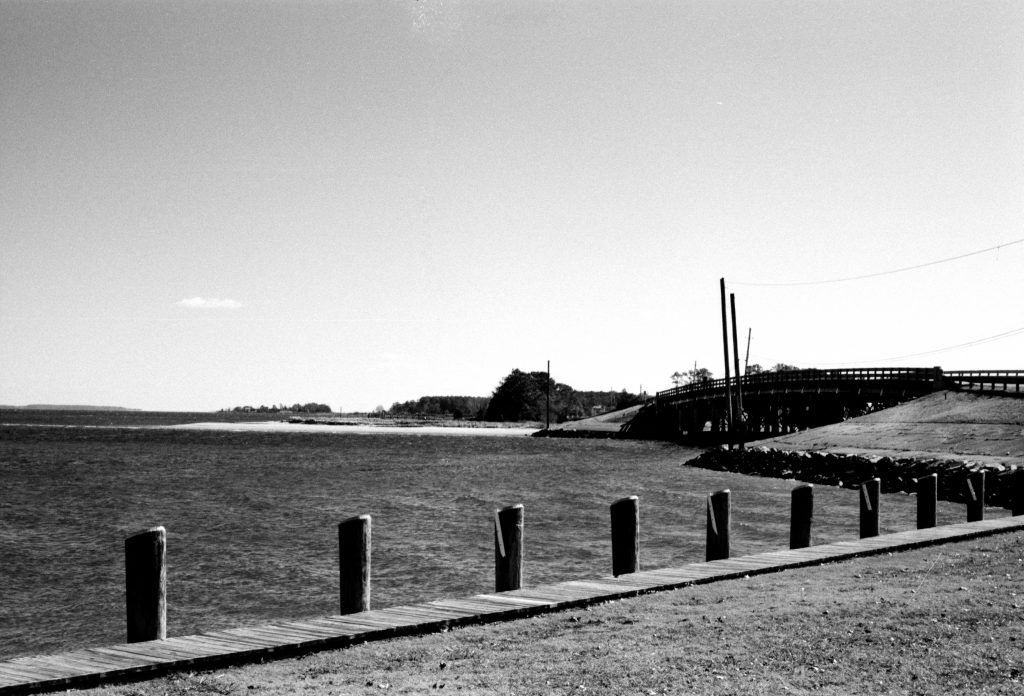
I wanted to compare these photos to my recent photos, so I went with the stand development in Rodinal again. I will try different developers and methods in the future. However, I do like the fact that Rodinal is compensating developer. If you let the tank stand, the developer stays in the same place. The highlights get developed first and the very dilute developer gets exhausted and stops. The shadows on the other hand continue to develop.
This tends to produce a very sharp picture and can compensate for underexposure. I’ve had good luck with it so far, producing good results. The downside to this approach is that it can produce a “halo” effect around stark changes in brightness. Rodinal also brings out grain more than other developers, which is the reason why it fell out of favor with film processors after the introduction and ubiquity of 135 (35mm) film.
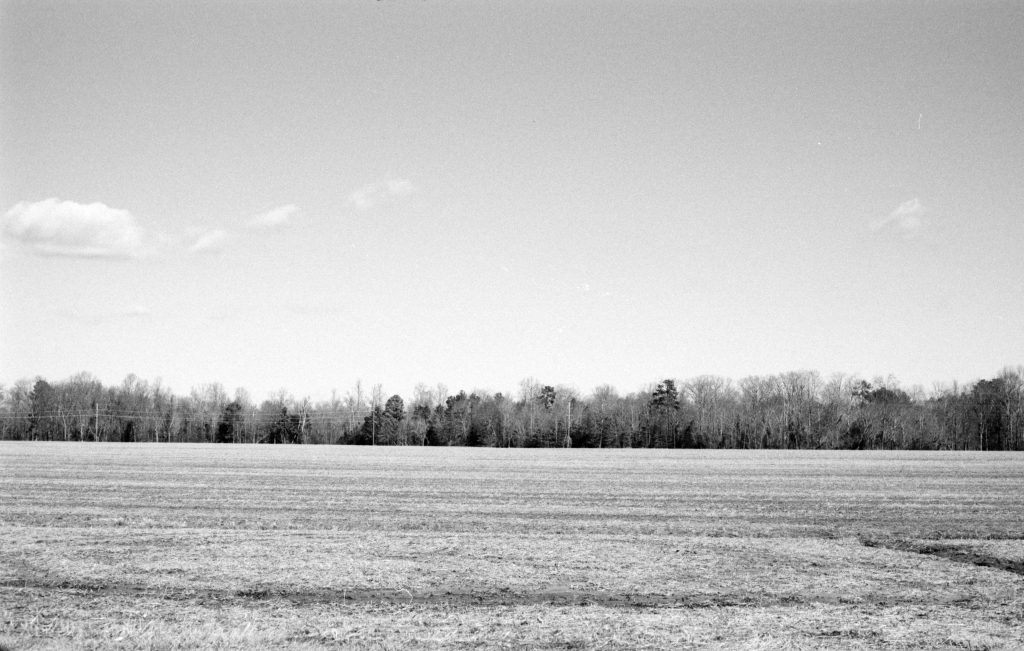
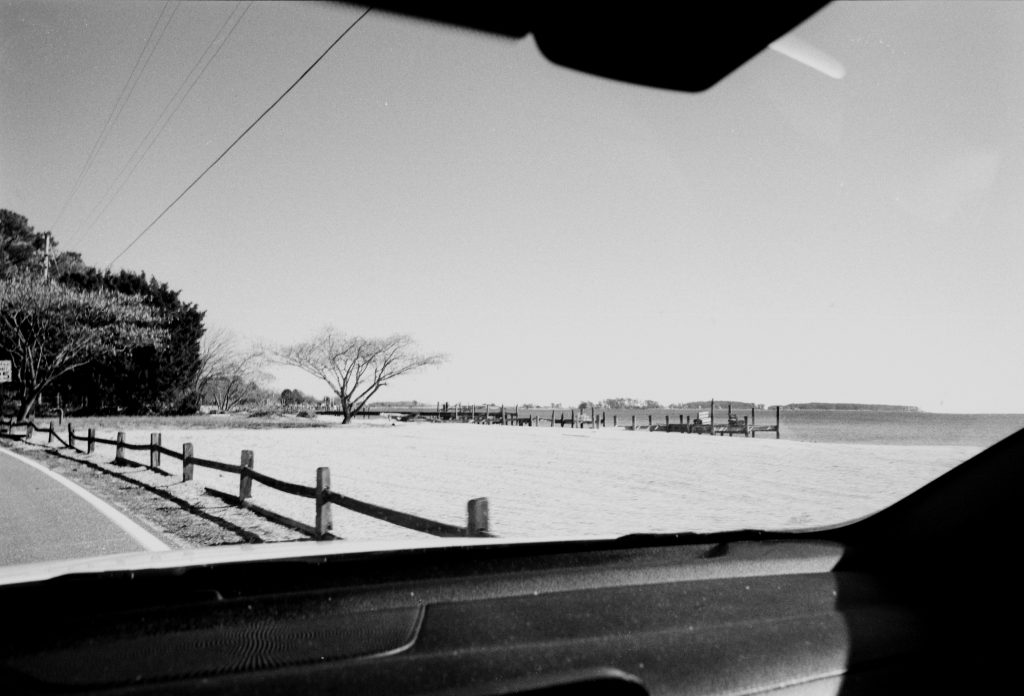
I parked and reloaded my camera. This was one of my throw away frames at the beginning of the roll. The camera locks itself into 1/1000 shutter speed until you get to frame one on the counter. This is designed for loading convenience, to make loading film faster. I was surprised that this frame came out so well.
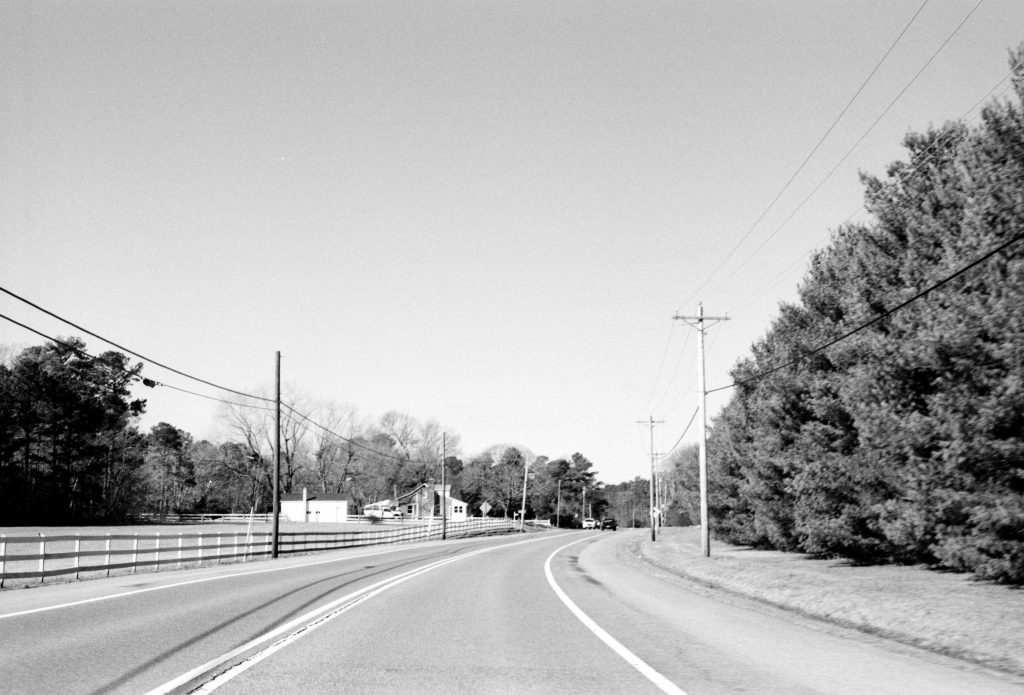
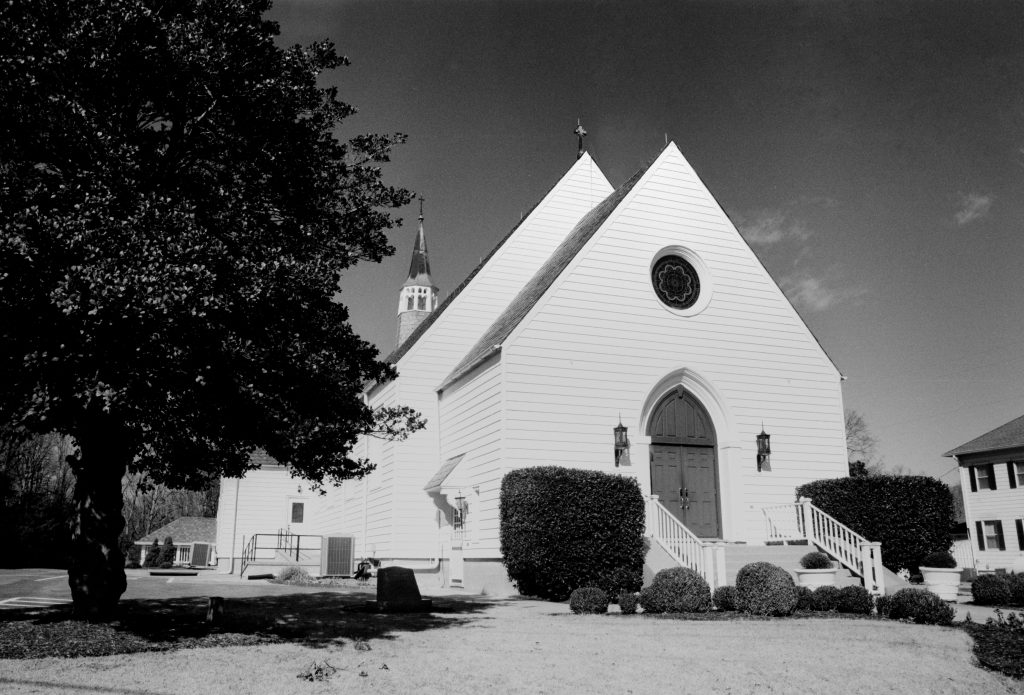
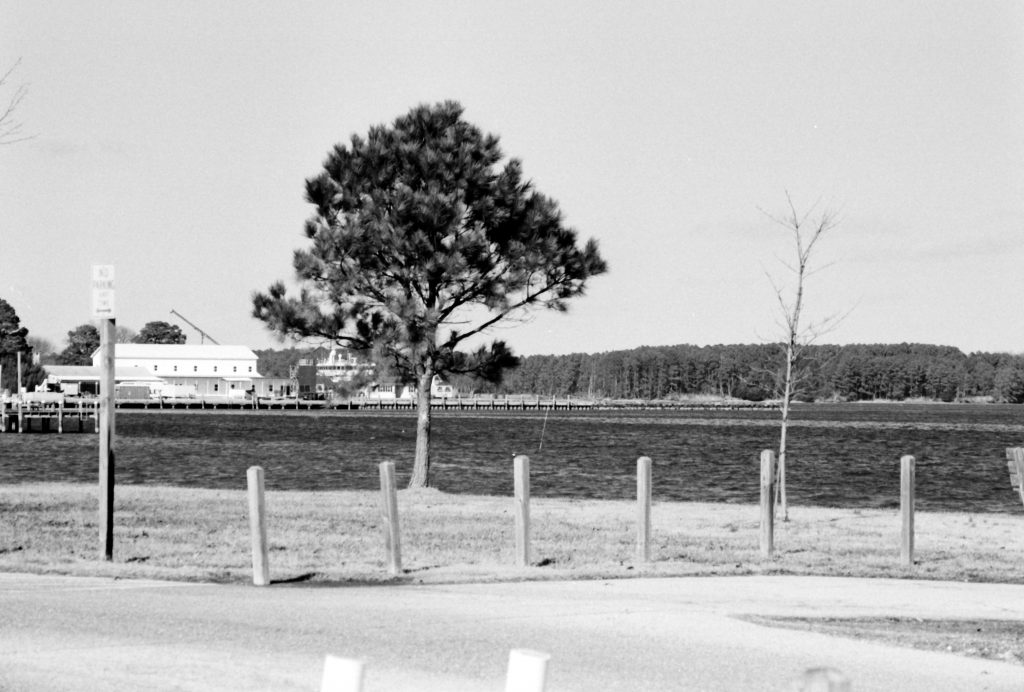
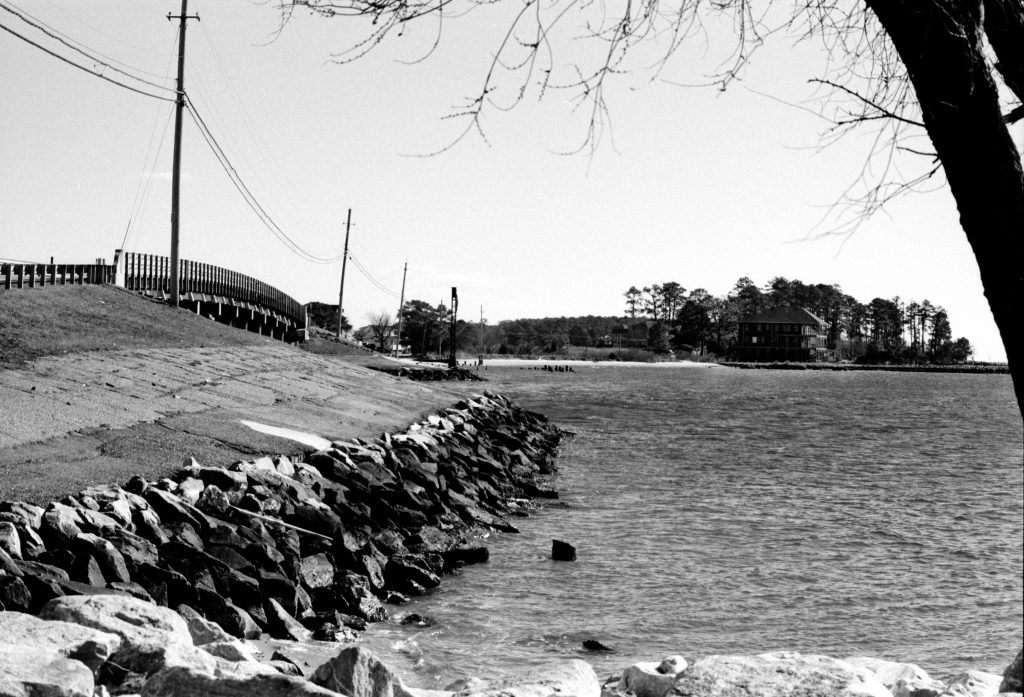
I like the look of the sky on this one. The sparse clouds show nicely on this photo
The last thing I want to note about this set of photos is that while my take can develop two rolls at once, I chose to develop them separately. I wanted a good comparison and didn’t want to change things up too much. I actually have two tanks (because the used one leaked). I had them going at the same time, which was fun to keep track of!
Development Details
- Film: Kodak T-Max 100
- Camera ISO setting: 100
- Developer: Rodinal with 2g Sodium Ascorbate
- Development Time: 1 hour
- Development Agitation: Stand (20 inversions first minute only)